Step by step
What actually happens, in order — from clicking Install to seeing your first application land on a board.
Install the template
Click Install in Snapi above (or, from inside Snapi, go to Pages and choose this template). You'll see a preview of what's about to be created — 4 pages and 1 board — then confirm. Nothing else to configure; the pages that need to talk to each other are already wired up.
See what got created
Everything lands in one folder on your Pages screen, named after the template, so it doesn't scatter across your workspace: Careers Hub, Job Posting, Job Detail, and Application, plus an Applicants board.
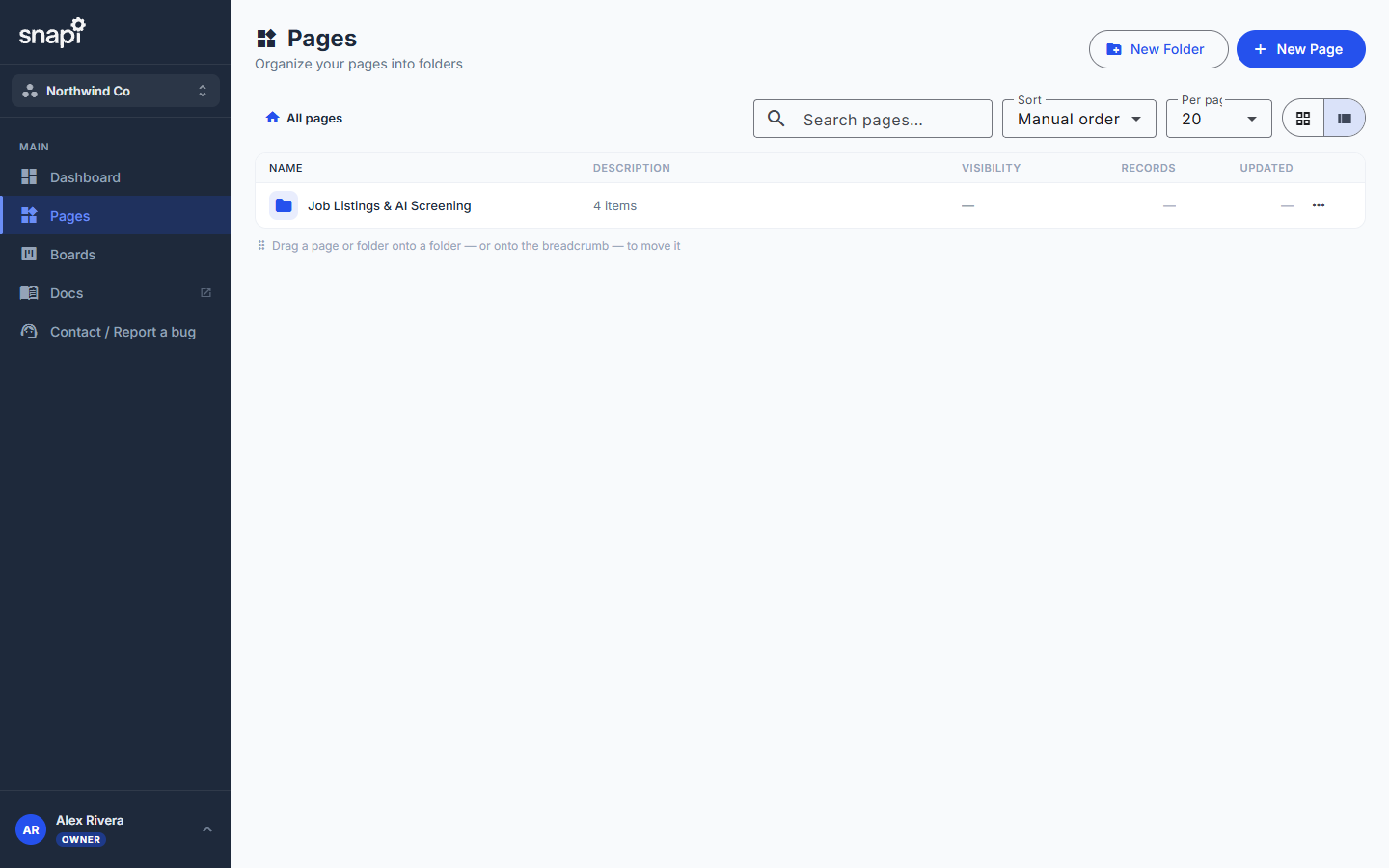
Your Pages list right after install — one folder, four pages inside it.
Add your jobs — the "Job Posting" page needs real data
Nothing shows up on the public careers page until you put something in Job Posting. Open it, click New Record, and fill in a title, department, location, and requirements. Set Status to Open.
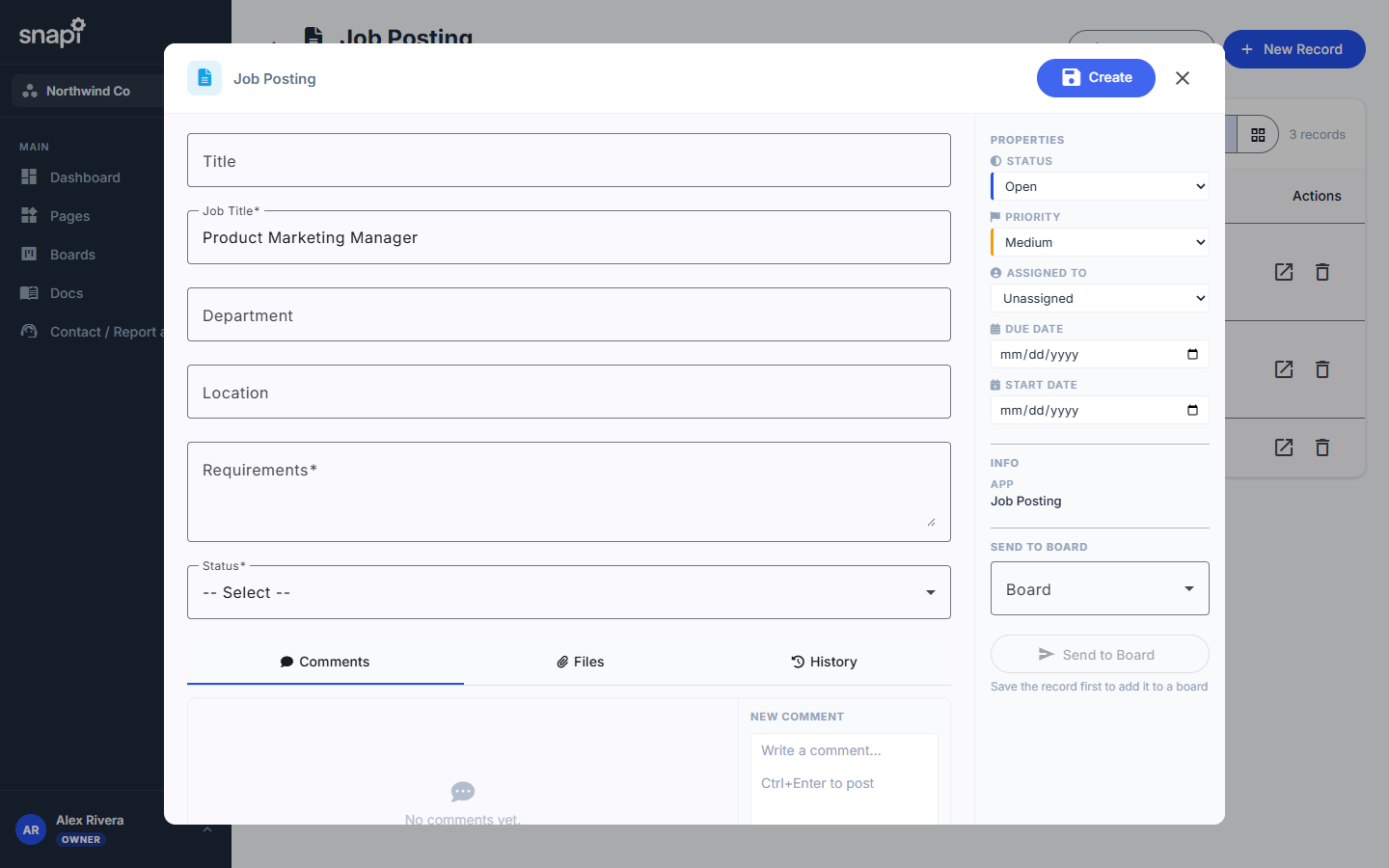
Adding an opening on the staff-only Job Posting page. Repeat for each role you're hiring for.
Test it: the public link
Open Careers Hub in the page builder and go to its Public Page tab. Under Public Link you'll find a real, working URL — this is the actual live page, not a preview. Open it in a new tab (or an incognito window, to see it exactly as a stranger would) to confirm your jobs are showing up before you put it anywhere public-facing.
Think of this link as your test URL: it works standing completely alone, with no website or iframe required, so it's the fastest way to check your data is right.
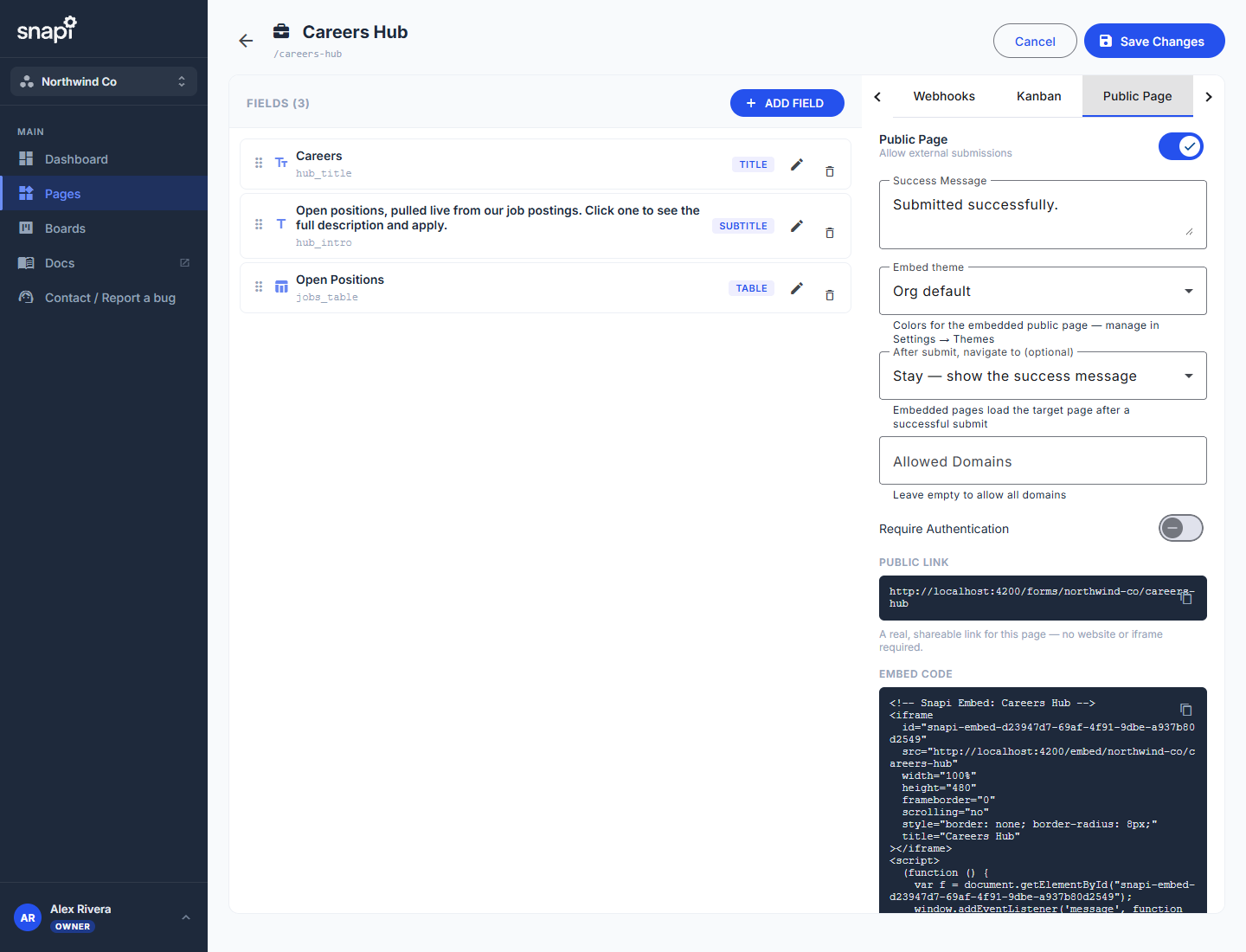
The Public Page tab: your test URL (Public Link) and the embed snippet (Embed Code) live right next to each other.
Embed it on your real site
Once you're happy with the test URL, scroll down on that same tab to Embed Code and copy the snippet — it's a plain <iframe> plus a small script that auto-sizes it, ready to paste into your own site's HTML (Webflow, WordPress, a hand-built page, anywhere). No build step, no SDK to install.
What an applicant sees
Three pages, in order: the list of open roles, one role's full detail, then the application form itself — pre-filled with which job they're applying for.
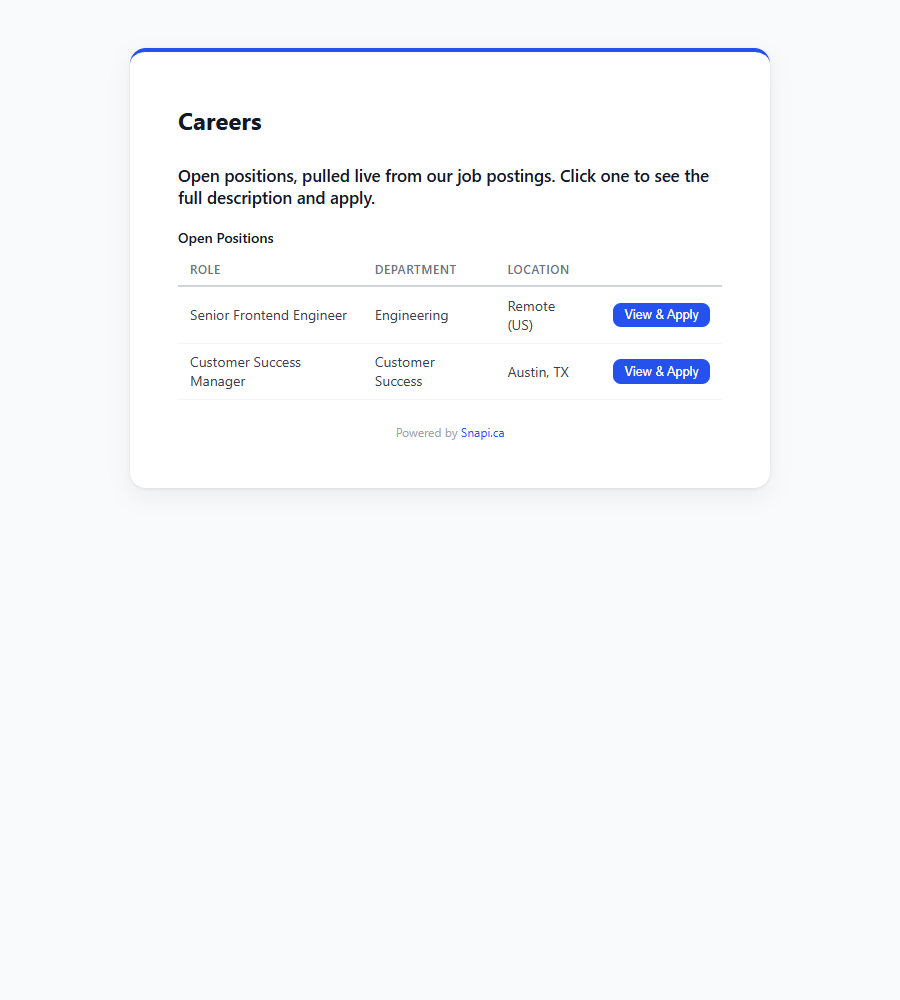
Careers Hub
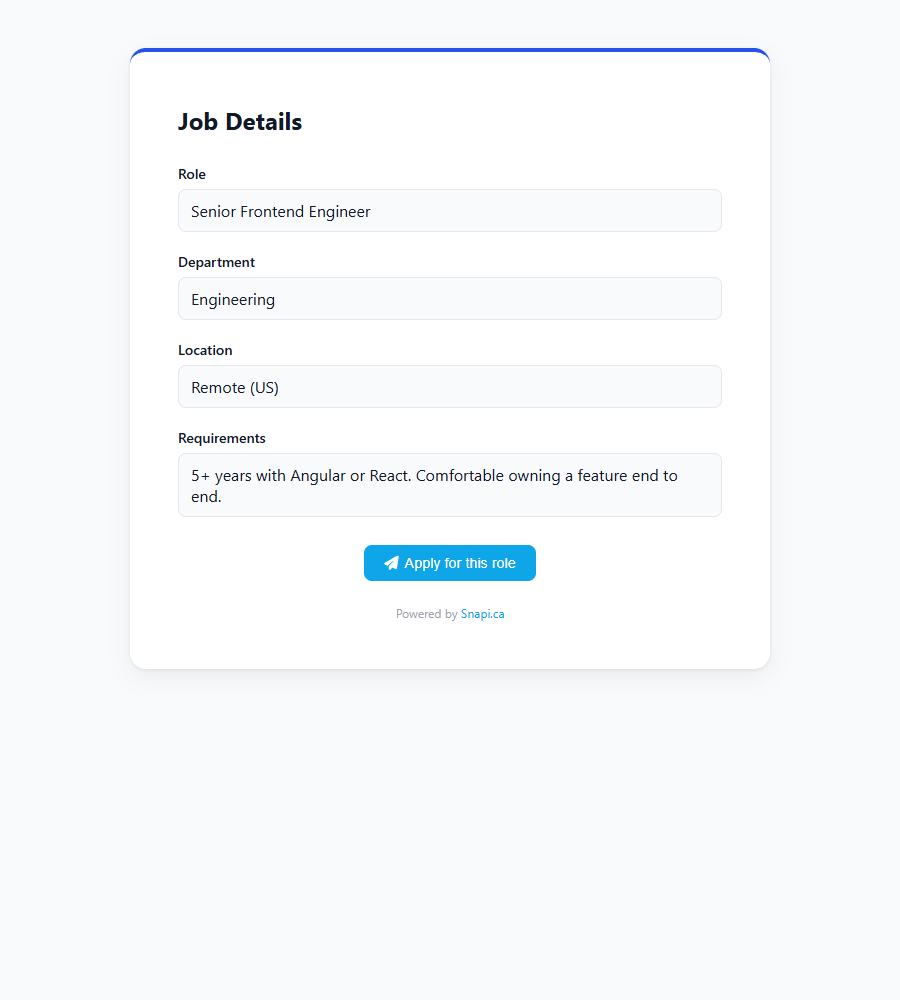
Job Detail
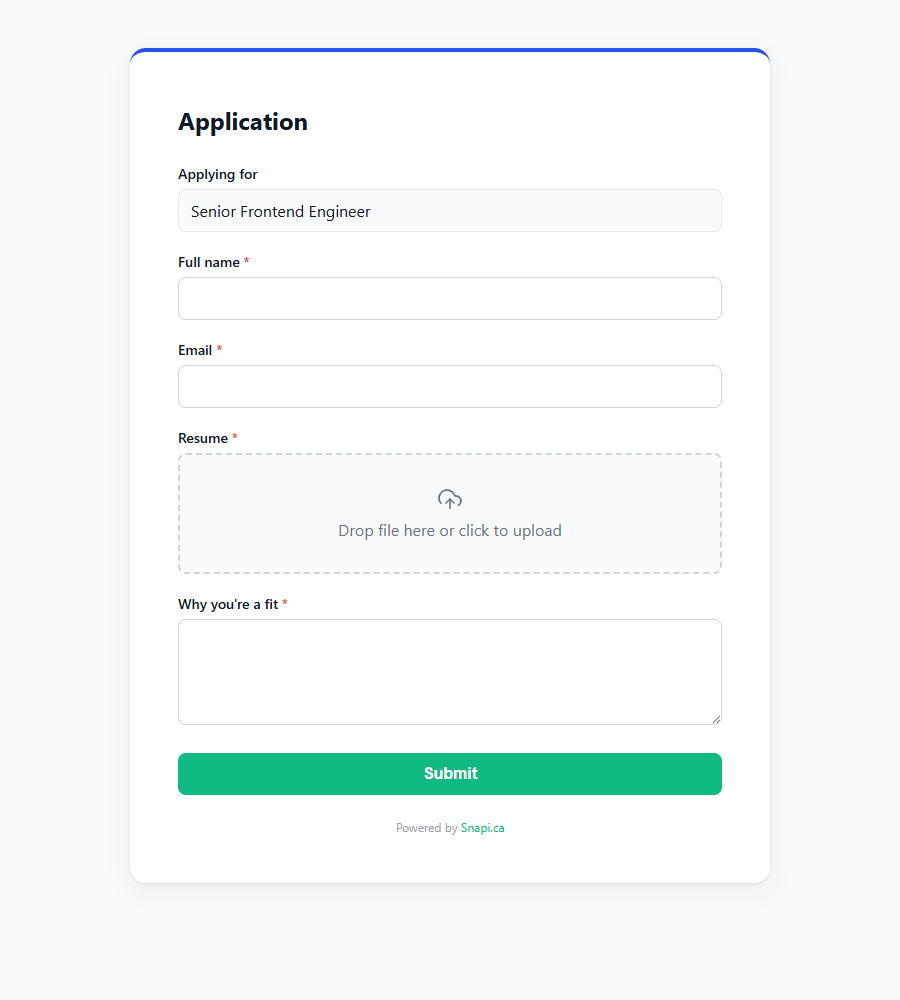
Application
What your team sees
Applicants never see this — it's internal-only. Every submission lands as a card on the Applicants board, starting in New. Drag a card through Shortlisted, Interview, or Rejected as you work the queue; each card carries the applicant's name and the auto-assigned application number.
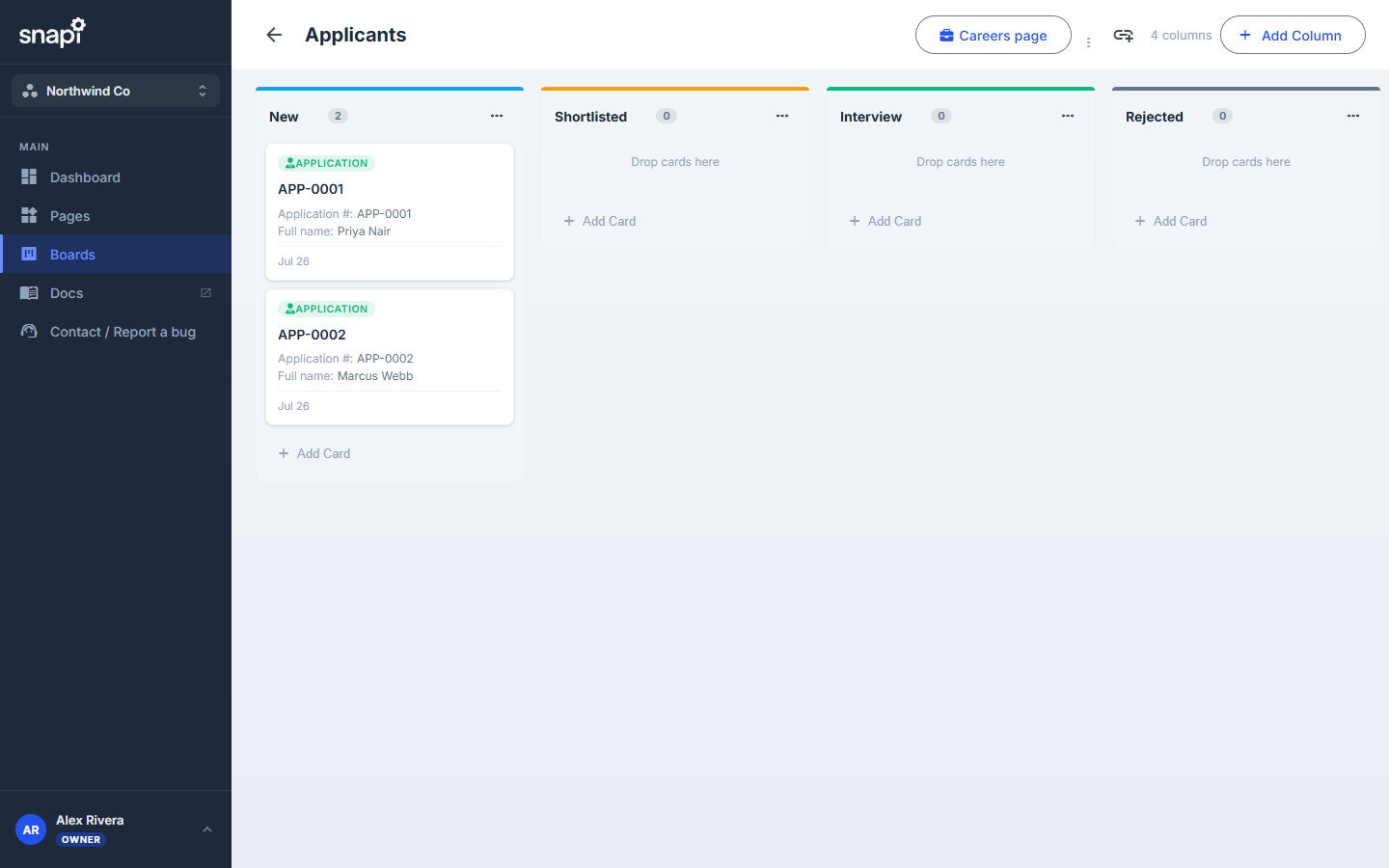
The Applicants board — visible only to your internal users, never to the public.